The first in GRP’s From Pilots to Scale series, this blog traces how resilience enterprises moved beyond their first grants along a graduation journey in scaling through institutional and commercial capital. Mountain Harvest shows what happens when grants, patient capital and commercial finance are woven together to accelerate both impact and ambition.
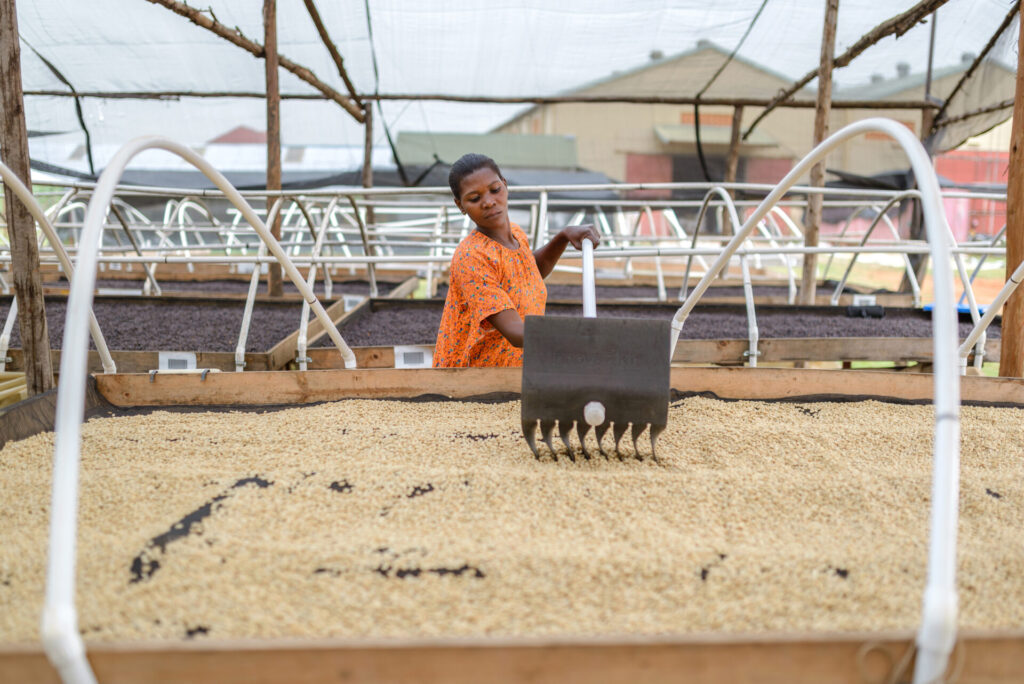
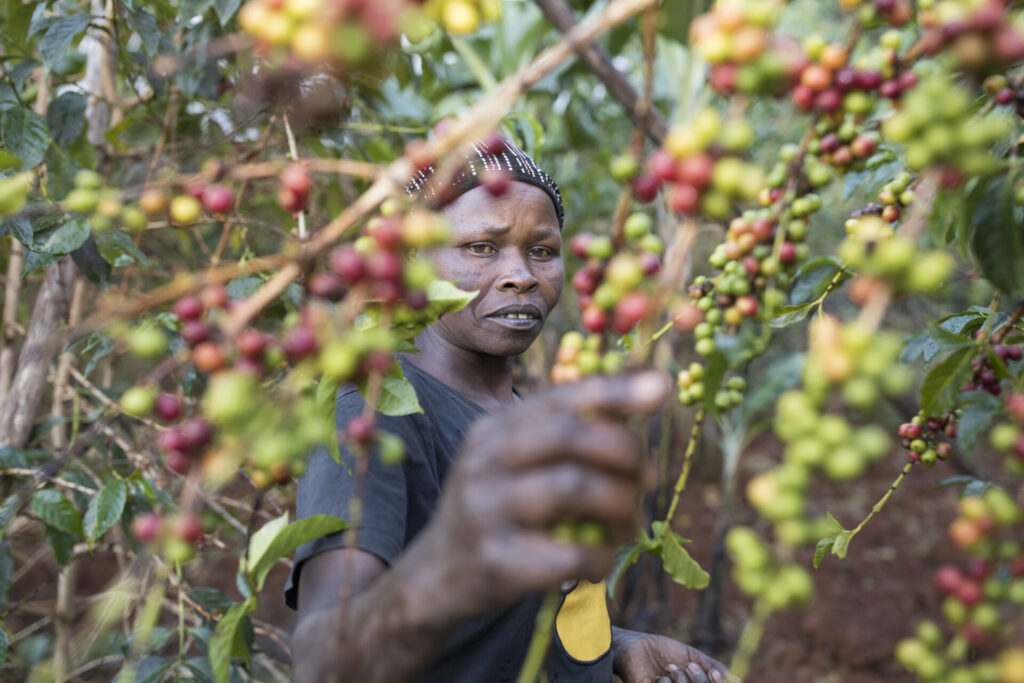
Mountain Harvest works with smallholder coffee farmers in Uganda’s mountainous regions. They connect them to higher-value specialty coffee markets while providing services such as agronomic training, access to inputs, finance and support for more climate-resilient farming practices.
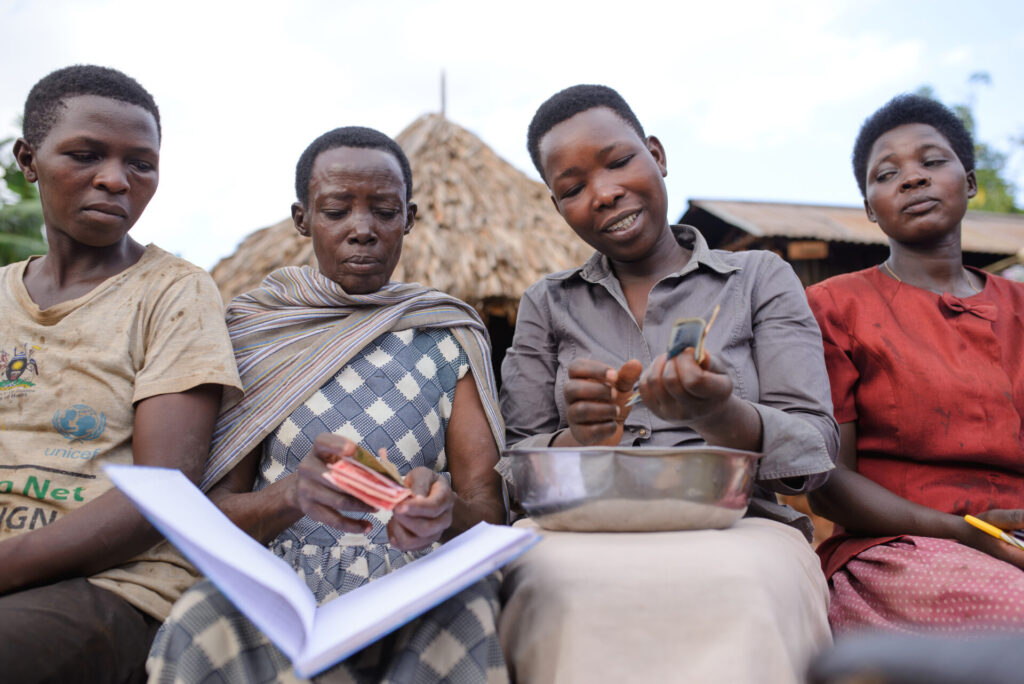
When Mountain Harvest was still developing its model, it worked with around 850 farmers. Through the Resilience for Peace and Stability, Food and Water Security Innovation Grant Program (implemented by UNDP and the Global Resilience Partnership and funded by GEF Challenge Fund), Mountain Harvest received a $200,000 grant during 2022-2024 to provide smallholder farmers access to fairly-priced loans, as well as change perceptions around the risk they represent, with an aim to foster resilience and stability.
Jjumba Martin / Mountain Harvest
Today, the company works with more than 3,000 farmers, demonstrating the scale that the model has achieved. Building this system required significant investment. Supporting farmers and improving coffee quality was costly, while the financial returns from these investments emerged only gradually. Patient capital and grant funding enabled Mountain Harvest to build and test their model before being expected to deliver commercial returns at scale.
The funding enabled the company to strengthen its relationships with farmers, develop its sourcing and processing capabilities, improve coffee quality and traceability, expand market access and demonstrate that paying farmers premium prices could be compatible with building a viable specialty coffee business. These capabilities helped Mountain Harvest build a stronger and more investable business over time, changing the investment proposition.
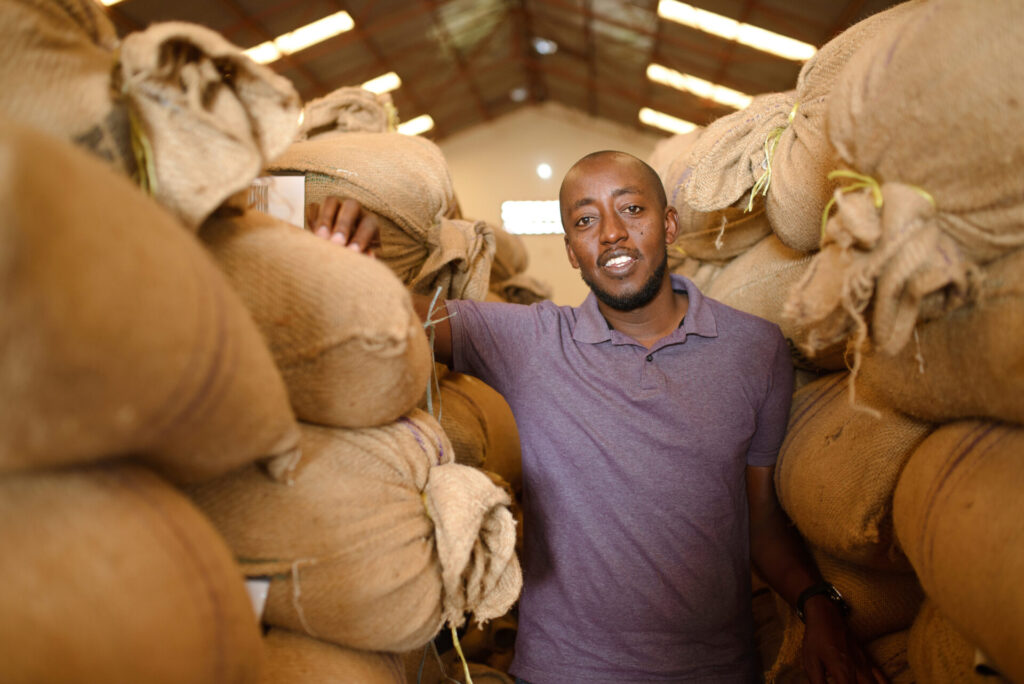
Developing an operating model, market relationships, infrastructure and evidence that its approach could work at greater scale opened the door to a different kind of capital. In 2024, Mountain Harvest pitched their work during an Investor Forum organised by GRP, and there they were introduced to Acumen. This strategic matchmaking led to Acumen announcing publicly in 2026 their investment in Mountain Harvest for its next stage of growth. Meanwhile, the Global Innovation Fund has also provided a $500,000 working capital facility to support coffee procurement and expansion. This new capital can help Mountain Harvest invest in assets such as processing facilities, warehousing and equipment, while expanding the number of farmers it reaches.
Jjumba Martin / Mountain Harvest
The example of Mountain Harvest shows that different forms of finance perform different functions as an enterprise scales. While grant funding can absorb some of the costs and risks involved in developing an innovative model, patient capital can give an enterprise time to experiment, learn and build capabilities for scale. Concessional or flexible debt can finance working capital and productive assets, while equity and other commercial forms of finance can support larger-scale growth once the business has demonstrated its model and reduced some of the uncertainties facing investors. Importantly, attracting commercial debt or equity does not necessarily eliminate the need for catalytic capital. Catalytic funding can remain important for activities such as farmer training and services, climate resilience, regenerative agriculture, traceability, innovation, and initiatives supporting women and youth, where the social and environmental impact may be significant, but the commercial return is indirect or longer term.
Jjumba Martin / Mountain Harvest
“Access to the right capital often starts with access to the right relationships. The Global Resilience Partnership connected Mountain Harvest with Acumen at a critical stage of our growth, but what stood out most was that they remained actively engaged throughout the investment journey. Their regular follow-up, practical guidance, and encouragement during due diligence gave us confidence and helped keep the process moving. Their strategic matchmaking is about far more than introductions. It’s about helping purpose-driven businesses build lasting partnerships that enable growth and impact,” Kenneth Barigye.
Mountain Harvest’s experience shows that the missing middle is not necessarily a permanent condition. Enterprises can move through it when they have access to financing that matches their stage of development. This requires a financing ecosystem in which different types of capital work together across different stages of an enterprise’s development. Enterprises, development organisations and investors each have an important role to play in making this work.
Over the coming months, GRP will publish different graduation journeys from across our portfolio, as well as a framework for how grantmakers, funders, and investors can design graduation into their programmes and portfolios.